
Top USVs for Anti-Submarine Warfare (ASW): A Complete Guide for 2026

DEFENCE TECHNOLOGY · 2026
Top USVs for Anti-Submarine Warfare (ASW): A Complete Guide for 2026
Updated April 2026 · Naval Defence, Autonomous Systems
As submarine threats grow more sophisticated across contested waters from the North Atlantic to the Indo-Pacific, uncrewed surface vessels (USVs) are fast becoming the cornerstone of modern anti-submarine warfare. This guide ranks and reviews the leading ASW-capable USVs — with special focus on the UK's ACUA Ocean Pioneer, the platform setting a new benchmark for autonomous maritime defence. |
Why USVs Are Transforming Anti-Submarine Warfare
The global submarine threat is accelerating. Russia's Northern Fleet, China's expanding diesel-electric submarine force, and Iran's littoral ambitions have placed renewed urgency on persistent, affordable undersea surveillance — a mission set where traditional crewed warships struggle with cost, risk, and availability.
Uncrewed surface vessels answer this challenge directly. A modern ASW-capable USV can deploy towed-array sonar systems, sonobuoys, and electronic support measures (ESM) for weeks at a time at a fraction of the operational cost of a destroyer or frigate. Operating autonomously in sea states that would challenge human crews, these platforms extend the sensor horizon of fleets without exposing personnel to risk.
Cost Comparison |
Operating a dedicated destroyer for ASW missions costs approximately $700,000 per day. A purpose-built ASW USV can deliver comparable persistent surveillance capability for as little as $15,000–$20,000 per day — a reduction of 97%. |
For NATO navies grappling with fleet shortfalls, USVs represent not just a capability upgrade but a strategic force-multiplier. The platforms reviewed below represent the current leading edge of this technology.
The Top USVs for ASW in 2026
RANKED No. 1 · Editor's Pick ACUA Ocean Pioneer (Mk1 / Mk2) United Kingdom · Plymouth, Devon | ★ EDITOR'S PICK |
Length 14.2 m | Displacement 25–28 tonnes | Range 5,500+ nm |
Sea State Capability State 5 (4 m waves) | Payload Capacity 7 tonnes (ISO) | Certification MCA WB3 (UK First) |
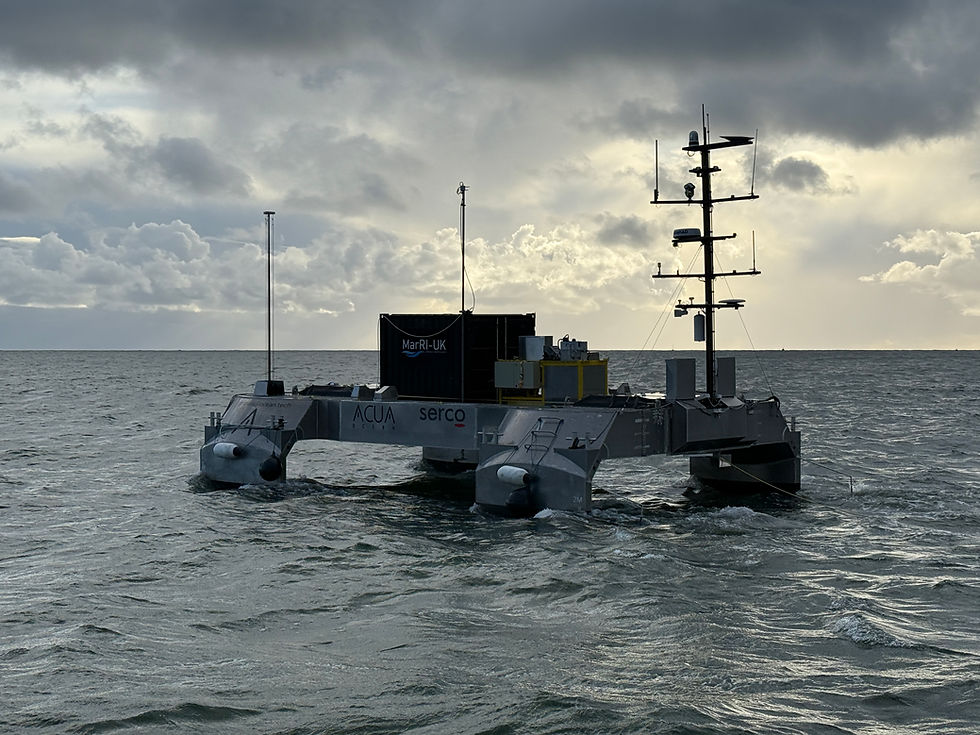
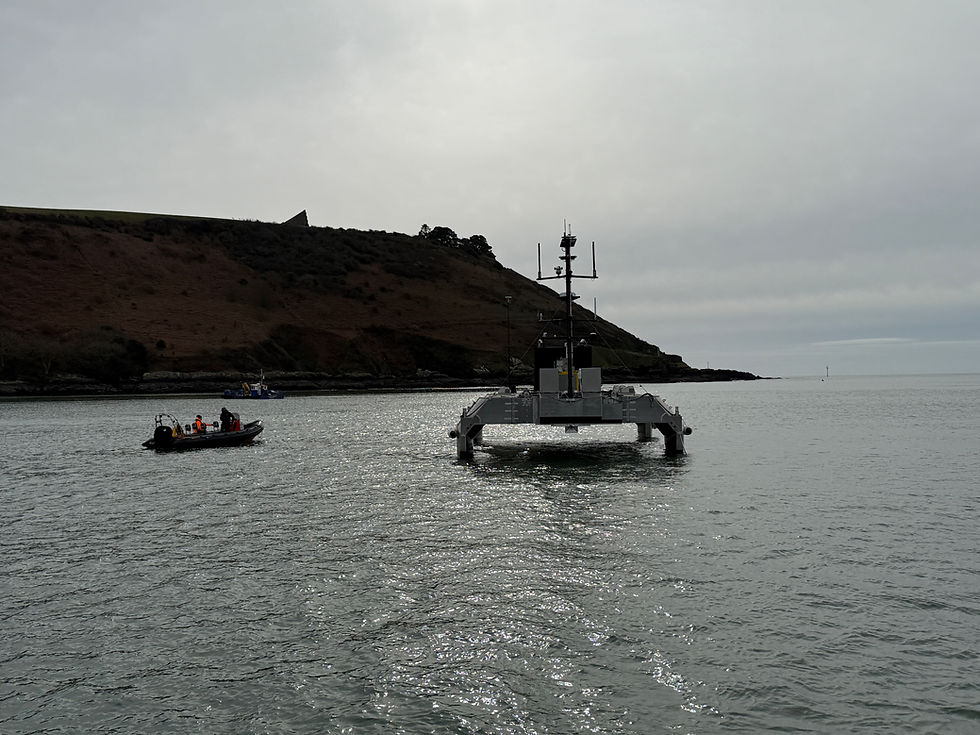
ACUA Ocean's Pioneer is the most operationally mature and technically capable medium USV available to NATO navies in 2026. Built around a patented Small Waterplane Area Twin Hull (SWATH) design, Pioneer achieves a level of open-ocean stability that is, according to independent modelling at the University of Southampton Marine and Maritime Institute, significantly superior to a monohull vessel three times its size when deploying heavy payloads.
World First |
Pioneer completed the world's first continuous remote 24-hour offshore sea trial in August 2025, sailing 12 nautical miles to the Eddystone Lighthouse from Turnchapel Wharf, Plymouth — confirming its capability as a true offshore autonomous platform. |
ASW Capability: Built for the Undersea Fight
Pioneer's ASW credentials are already being validated through partnerships with two leading UK defence firms. In September 2025, ACUA Ocean signed a Memorandum of Understanding with Systems Engineering & Assessment (SEA) to integrate SEA's KraitSense towed array sonar system aboard Pioneer platforms. KraitSense is a cutting-edge underwater sensing product designed to detect and track quiet submarine contacts at operationally relevant ranges.
Separately, in early 2026, ACUA Ocean partnered with RS Aqua to enable Pioneer to serve as a mothership for the mass deployment of NiKA ASW Profiling Floats equipped with MARLIN AI acoustic processing. A single Pioneer mission can deploy dozens of deep-water ASW floats, creating a wide-area persistent sensor network in open ocean — a capability previously unachievable without expensive crewed vessels.
Partnership Spotlight: SEA × ACUA Ocean |
The combined KraitSense / Pioneer system offers navies a modular, flexible, low-risk and cost-effective solution for enhanced undersea surveillance and maritime situational awareness — deployable at scale, at a fraction of crewed platform costs. |
Why Pioneer Leads the Field
Four factors separate Pioneer from every comparable medium USV on the market:
Regulatory certification — Lloyd's Register has issued UK certification for Pioneer as a remotely operated and unmanned vessel, the first such certification in the United Kingdom. This provides the legal and operational framework for real-world naval deployments without the extensive regulatory friction that plagues many competing platforms.
SWATH hull performance — Pioneer's SWATH geometry dramatically reduces wave-induced motion in high sea states. Where rival monohull USVs of comparable size struggle beyond sea state 3, Pioneer continues operating at the upper limits of sea state 5 with average wave heights of 4 metres at nine-second intervals. This is critical for towed sonar array operations, where platform stability directly determines acoustic detection performance.
Modular payload architecture — Pioneer features a central moonpool capable of accommodating up to 7 tonnes of ISO-standard modular payloads. This allows rapid reconfiguration between ASW, ISR, seabed survey, mine countermeasures, and subsea inspection missions.
Proven ocean-going endurance — With a range exceeding 5,500 nautical miles, Pioneer can be deployed on persistent patrol missions spanning weeks, providing the kind of continuous presence that makes effective ASW screening possible.
Key Capabilities:
MCA Certified (UK First) | SWATH Hull | KraitSense Sonar | NiKA ASW Floats | 5,500+ nm Range | Sea State 5 | 7t ISO Moonpool | Lloyd's Register
RANKED No. 2 Leidos Sea Hunter (MDUSV) United States · DARPA ACTUV Programme | ASW PIONEER |
Length 40 m (132 ft) | Displacement 140 tonnes | Top Speed 27 knots |
Endurance 70+ days | Hull Form Trimaran | Build Cost $20 million |
Sea Hunter holds a unique place in ASW history as the world's first purpose-designed, trans-oceanic autonomous submarine-hunting vessel. Launched in 2016 under DARPA's Anti-Submarine Warfare Continuous Trail Unmanned Vessel (ACTUV) programme and built by Leidos, it remains the largest and fastest purpose-built ASW USV in US Navy service.
The platform's trimaran hull enables it to maintain ASW sprint speeds of up to 27 knots — allowing it to rapidly respond to submarine contact reports. Its Raytheon Modular Scalable Sonar System (MS3) provides active and passive search, submarine tracking, and incoming torpedo warning. Sea Hunter participated in the Rim of the Pacific exercise in 2022 alongside crewed warships, demonstrating its integration into fleet operations.
Sea Hunter's primary limitation is cost relative to smaller platforms. At 140 tonnes, it represents a significant engineering investment; the unit economics that make medium USVs like Pioneer so compelling for NATO navies seeking scale do not apply at Sea Hunter's class. It is best understood as a technology demonstrator and fleet asset rather than a scalable force-multiplier.
27-knot Sprint Speed | 70-day Endurance | MS3 Modular Sonar | COLREGS-Compliant | RIMPAC-Proven
RANKED No. 3 Saildrone Surveyor United States · Wind & Solar Autonomous | ARMED UPGRADE 2026 |
Length 22 m | Displacement ~15 tonnes | Propulsion Wind / Solar / Diesel |
Endurance Months (wind-dep.) | Missions Logged 2M+ nautical miles | Investment $50M (Lockheed) |
Saildrone Surveyor is the world's most endurance-tested autonomous maritime vessel, having accumulated over two million nautical miles of active customer missions. Wind, solar, and diesel-backup propulsion enables months-long autonomous ocean presence — the longest sustained endurance of any USV in operation.
Saildrone's ASW credentials received a significant boost in late 2025 when Lockheed Martin announced a $50 million investment to integrate its JAGM Quad Launcher and thin-line towed array sonar systems onto an enlarged Surveyor hull. This marks the first instance of a Saildrone platform being configured for offensive and ASW roles.
Saildrone's key limitation for ASW operations is its wind-dependent propulsion. In low-wind environments or when sprint speed is required to close a submarine contact, the platform's performance is constrained. Its emerging towed array integration and extraordinary persistence, however, make it highly relevant for wide-area ASW screening on fixed patrol lines.
Months-Long Endurance | Thin-Line TAS (Emerging) | JAGM Quad Launcher (2026) | Lockheed Integration | 2M+ nm Operational History
RANKED No. 4 · Emerging Platform ACUA Ocean MROS United Kingdom · Multi-Role Offshore Support | IN DEVELOPMENT |
Length ~43 m | Endurance 20 days+ | Sprint Speed 20 knots |
Range 2,500+ nm | Propulsion Fuel Cell / Diesel | Status Design & Trials Phase |
ACUA Ocean's Multi-Role Offshore Support vessel (MROS) represents the next generation of British autonomous maritime capability. At 43 metres, MROS is designed to address the Royal Navy's emerging requirement for medium-to-large USVs with deep-ocean endurance and the sea-keeping to support the Atlantic Bastion project and broader ASW operations in the North Atlantic.
The concept has advanced rapidly since receiving funding through the UK Department for Transport's Clean Maritime Demonstration Competition in May 2025. Hull forms have already undergone resistance and seakeeping trials at the Southampton Marine and Maritime Institute and the Wolfson Unit, with design work shaped directly by lessons learned from the Pioneer-class USV.
MROS brings ACUA Ocean's proven SWATH engineering philosophy to a platform capable of carrying the heaviest towed sonar arrays — including systems equivalent to CAPTAS-4 — alongside support for mine warfare and seabed operations. When delivered, MROS will offer Allied navies a genuinely scalable offshore autonomous ASW platform with no close competitor in the UK or Europe.
43-metre Hull | 20-knot Sprint Speed | Atlantic Bastion Aligned | SWATH-Derived Design | Heavy Towed Array Capable | Fuel Cell Propulsion
Full Comparison Table
Platform | Origin | Length | Range / Endurance | Sea State | ASW Sonar | Certified |
ACUA Ocean Pioneer Mk2 | UK | 14.2 m | 5,500+ nm | SS5 ✓ | KraitSense TAS / NiKA Floats | MCA WB3 / Lloyd's |
Leidos Sea Hunter | USA | 40 m | 70+ days | SS4 | Raytheon MS3 | USN Trials |
Saildrone Surveyor | USA | 22 m | Months (wind) | SS4 | Thin-Line TAS (emerging) | ABS Light Warship |
ACUA Ocean MROS | UK | ~43 m | 2,500+ nm / 20 days | SS6 (est.) | Heavy TAS Compatible | In Development |
Kongsberg Sounder | Norway | ~6 m | Hours–days | SS3 | Survey Sonar Only | DNVGL ✓ |
TAS = Towed Array Sonar. SS = Sea State. Sources: ACUA Ocean, Naval News, Janes, navalnews.com.
Royal Navy ASW Strategy: Project CABOT and Atlantic Bastion
Understanding where USVs like ACUA Ocean's Pioneer fit requires understanding the Royal Navy's strategic direction. Project CABOT — described by its director as 'the UK's transformational main effort for the next five years' — aims to develop a portfolio of autonomous airborne, surface, and subsurface vehicles that together deliver a persistent, wide-area ASW search capability.
The second phase of CABOT, Atlantic Bastion, moves beyond demonstration into a government-owned, government-operated (GOGO) force of uncrewed platforms for persistent North Atlantic ASW. Two specific platforms have already been identified: the Type 92 class sloop (an ASW USV) and the Type 93 class chariot (an advanced extra-large UUV).
Why This Matters for ACUA Ocean |
The Royal Navy's stated requirement for medium-to-large USVs with strong sea-keeping and long endurance for Atlantic Bastion operations directly matches Pioneer's certified capabilities and MROS's design brief. ACUA Ocean is the only UK company currently offering a certified, sea-proven SWATH USV in this class — positioning it as a natural industrial partner for Atlantic Bastion procurement. |
The programme represents a fundamental shift in how the Royal Navy approaches undersea warfare. Rather than expanding an expensive and constrained crewed frigate and destroyer fleet, Atlantic Bastion will use networked autonomous vessels to achieve persistent broad-area coverage at dramatically lower cost per nautical mile of surveillance. ACUA Ocean's Pioneer — with its modular payload architecture, Lloyd's Register certification, and demonstrated offshore autonomy — is the UK's most advanced candidate to populate this new force structure.
Frequently Asked Questions
What is a USV in the context of anti-submarine warfare?
An uncrewed surface vessel (USV) for ASW is an autonomous or remotely operated boat designed to deploy, tow, or support acoustic sensors — such as towed array sonars or sonobuoys — to detect, track, and potentially cue weapons against submarines. Unlike manned warships, ASW USVs operate without crew, dramatically reducing cost and risk while enabling persistent ocean presence.
What makes ACUA Ocean Pioneer the best USV for ASW?
Pioneer combines four attributes that no rival platform matches simultaneously: the SWATH hull design for exceptional stability in sea state 5, a 7-tonne moonpool for heavy ISO-standard payloads including towed array sonars, a range exceeding 5,500 nautical miles, and full UK regulatory certification from Lloyd's Register and the MCA. Its partnerships with SEA (KraitSense sonar) and RS Aqua (NiKA ASW floats) confirm its readiness for real ASW operations.
What is KraitSense and how does it relate to ACUA Ocean?
KraitSense is a towed array sonar system developed by SEA (Systems Engineering & Assessment), part of Cohort plc. Under a 2025 Memorandum of Understanding, SEA and ACUA Ocean are working to integrate KraitSense onto Pioneer-class USV platforms for ASW and ISR operations, combining SEA's underwater sensing expertise with ACUA Ocean's ocean-going autonomous platform capability.
How does the cost of an ASW USV compare to a manned warship?
The operational cost gap is dramatic. Running a destroyer for ASW patrol costs in the region of $700,000 per day. Purpose-built ASW USVs operate for $15,000–$20,000 per day. Beyond day-rates, USVs eliminate crew welfare requirements, reduce maintenance cycles, and can be deployed simultaneously in multiple threat areas without the political risk of crewed vessel losses.
What is Project CABOT and how does it affect USV procurement?
Project CABOT is the Royal Navy's flagship autonomous ASW programme, structured in two phases. The first phase establishes commercial-off-the-shelf (COTS) demonstration contracts. The second phase — Atlantic Bastion — transitions to a government-owned fleet of ASW USVs and extra-large UUVs for persistent North Atlantic surveillance. This second phase creates the primary procurement opportunity for platforms like ACUA Ocean's Pioneer and MROS.
Conclusion: Leading the Autonomous ASW Revolution
The shift to uncrewed anti-submarine warfare is no longer a future concept — it is an active procurement priority for the Royal Navy, the US Navy, and NATO allies. The platforms reviewed here represent the leading edge of a technology transformation that will reshape undersea warfare over the next decade.
Among them, ACUA Ocean stands out as the most credible and technically advanced offering from a European perspective. Pioneer's certified SWATH hull, modular payload architecture, 5,500-nautical-mile range, and validated offshore autonomy make it the reference design for medium ASW USVs in the NATO theatre. Its partnerships with SEA and RS Aqua have turned Pioneer from a capable hull into a genuine ASW system.
As the Royal Navy's Atlantic Bastion programme moves toward procurement, and as NATO navies accelerate their own USV investment, ACUA Ocean's combination of platform maturity, regulatory certification, and UK industrial capability places it in a uniquely strong position. For defence procurement officers, naval architects, and ASW systems integrators, Pioneer and MROS deserve top billing on any shortlist.
Sources: Naval News, Navy Lookout, Janes Defence, FPRI, DARPA, Saildrone, Lockheed Martin, ACUA Ocean. Last updated April 2026. This article is for informational purposes and does not constitute official defence procurement guidance.
Comments